
We help Tennessee manufacturers and organizations reduce energy costs, improve system performance and access incentives that lower project payback times. Contact us for unbiased solutions with measurable economic impacts.
- Energy assessments and diagnostics
- Financial and incentive guidance
- Renewable and emerging technologies
Schedule Training
Email healthsafety@tennessee.edu to schedule training.
Our Services
We offer unbiased solutions with measurable economic impacts. Explore how we can help you reduce risk and improve performance.
Analyze your load profile and participate in demand‑response programs that reduce peak charges and generate incentives.
Assess HVAC efficiency, identify performance drift and recommend adjustments or retrofits that reduce operating costs and extend equipment life.
What is ISO 50001:2018?
ISO 50001:2018 is an international standard that provides a framework for establishing, implementing, maintaining and improving an energy management system (EnMS). This standard helps organizations improve energy performance, including energy efficiency, use and consumption, through a systematic approach.
The standard is applicable to organizations of all types and sizes, regardless of geographical, cultural or social conditions. It is compatible with other ISO management system standards and follows the Plan-Do-Check-Act (PDCA) model for continual improvement.
Why is ISO 50001 Important?
Energy is a critical resource for organizations, and its efficient use can lead to significant cost savings and environmental benefits. ISO 50001 is important because it:
- Provides a structured approach to managing energy.
- Helps organizations reduce energy costs and improve competitiveness.
- Supports compliance with legal and regulatory requirements.
- Contributes to climate change mitigation by reducing greenhouse gas emissions.
- Encourages a culture of continual improvement in energy performance.
Benefits
- Improved energy efficiency: Systematic identification and implementation of energy-saving opportunities.
- Cost Reduction: Lower energy bills through better energy use and management.
- Environmental Impact: Reduced carbon footprint and alignment with sustainability goals.
- Performance Monitoring: Use of Energy Performance Indicators (EnPIs) and Energy Baselines (EnBs) to track improvements.
- Integration: Easily integrates with other ISO management systems like ISO 9001 (quality) and ISO 14001 (environment).
- Operational control: Enhanced control over energy-intensive processes and equipment.
- Organizational awareness: Increased awareness and competence among staff regarding energy use and efficiency.
Evaluate lighting systems to identify LED upgrades, controls and daylighting strategies that reduce energy use and improve workspace quality.
Implement metering strategies that reveal hidden energy waste and support data‑driven decision‑making.
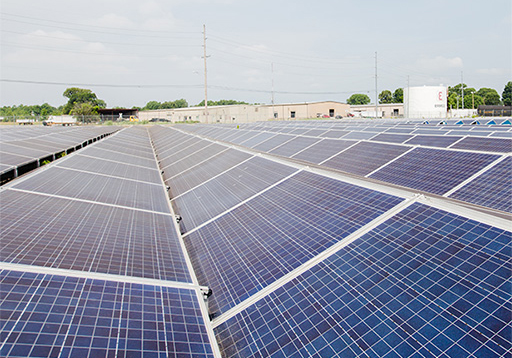
Evaluate solar feasibility, storage options and financial models that help you adopt renewable energy with confidence.